The summer has churned by quickly and the time that we could count upon with the leisure of the long, warm days has not accumulated as I would like. Days have ended with G too tired to do much more than eat his dinner and begin the rituals of bedtime. There are still the books, the tooth brushing and the requests hugs to fold ourselves into the end of the day.
Friday night though, he asked:
"Why did you take your ring off?"
It has been nearly eight months of separation, but the ring came off 3 years ago. Part rite of passage, part cry for attention, it came off to do the dishes and I a particular pique, I decided not to put it back on. The in-laws had asked about it and now my son. Few others noted it, but never his mother.
I stalled and redirected for a moment with a comment, but he held me accountable. Ultimately I was relieved that he asked. There are things that need to talk about and waiting until I perceive he is ready for certain talks may let too much time pass. When others have asked me how he is doing with everything, I cite the greater calm that has prevailed since I moved out. Fewer tantrums, with me at least, are a positive sign. There were times when he would be violently inconsolable, my perception being that he was picking up on the tension between his parents but without ever seeing a fight, he only had the differences in parenting styles to cue him that something was vaguely awry. Whatever he had evidence of never lined up with the tensions that he picked up on.
I proceeded cautiously, holding myself to the conviction that I was only ever going to hold myself to account, rather than blame his mother.
"Mum and I never communicating very well. I'm not very good at asking for things. I've always hoped that I could model the way I want to be treated and demonstrate the things that are important to me but that didn't work."
He did not interrogate further. In the past he is said that he thought everything was okay and that we were happy. There was normalcy, at least for him but in that familiarity he remains attached to there were those tantrums. They have ceased, at least with me, over the last eight months. There have been a few occasions when he has sought the restoration of that past, with the orchestration of a group hug or a round robin of kisses.
For the most part, he has managed with the parting. I'm a few floors away, living in the same building and our ergot has adopted "upstairs" and "downstairs" to refer to our respective homes, if either or both of them ever equate to the place that he recalls me being in during those earlier chapters of his life.
Never sure if I've said enough, too much or too little, the night routine commenced and he fell asleep after a reading of Dr. Seuss' "Tad and Todd."
In the morning, I let him know that I was proud of him for asking the tough question and that it would always be welcome and encouraged. Beyond that it was a skill that would put him ahead of me and serve him in good stead in the years to come.
Sunday, July 21, 2019

Thursday, May 9, 2019
From the Mouthes of Babes
As the day wound down, I picked up my son at after school care. The routine is familiar. I trudge in after running the 10K from the office and track my son down, whether he is outside, in the gym, playing or doing crafts somewhere. Even if he misses me or is eager to get home, there is a long-standing desire to hang out a little longer. He could be waiting for the end of a movie, waiting for his turn at something or just too caught up in what's going on to bring it to an abrupt halt. I log him out of attendance and for the time after that, I start to wonder if I am on staff and then after a little longer I wonder if I should call it a day, log him back in and head home for his mother to attempt to pick him up.
Yesterday afternoon, though, I walked in to hear him riffing on one of my paternal rants. It was laughably cringe-worthy to hear my 7-year-old telling one of the younger kids that he should not be touching another person's stuff. He does listen to me. It is the kind of thing that I tell him when we and are walking to the train station and he gets curious about whatever he sees and wants to pick it up as his own, or if he balances himself on a car mirror so he can kick the icicles off the undercarriage or the scuds that accumulated in the wheel-wells. (I know, I know; a scud is something else entirely but it's the aptly sludgy word for that unnameable clog of snow.) Ever-conscious of a scenario where someone storms out to tell my son to get off the lawn or stop touching the car, I warn him about other people's property. My warning has expanded in length over the years as I try to give my son the full rationale rather than the harsh admonishment and I had that mix of amusement and nausea as he nailed me verbatim under different circumstances. The younger kid was touching one of my son's toys.
In many ways it was a bookend. I recall my first time teaching nearly 30 years ago where I seemed to be teaching with a voice and demeanour that left me waiting for one of my students to tell me, "You're just like your father." Despite that consciousness, I was perceived to be my own self rather than an amalgam of my parents' and ancestors' influence.
As we turned in for the night and the zone-out music was cued up to lull my son, I let him know that I heard him and he cringed at the revelation just as badly as I did. It was a treasured embarrassment and there will be variations as more of my chestnuts crystallize. I know the day will come when he will dust off my other chestnut about the difference between knowing and doing. On this night, I actually took the time to double-down on that line and tell him, for the first time, that knowing but not doing is "not knowing."
Sunday, December 16, 2018
A Random Snapshot
He was tired. We had miscommunicated. It was a long day: music homework... music class. Every good boy, etc., etc. A stop at the library. A large Star Wars book among his booty and an intriguing Mexican novel about immigration my sole demand of the library. Cell phone shots of him playing in the library. Commuting through the city as the colour and grit of the city prompted inquiries about the homeless we'd crossed paths with. On our way to the last train home, he was resisting comfort and not even a cherry sundae failed to re-energize him enough to bear comfort or conversation.
I'd strode ahead a bit, glancing back with obsessive compulsive frequency to ensure he was nearby and still moving. On the last glance, he was racing to catch up, ready to dissolve into tears. He bumped his head and bit his tongue. I could picture the pout pulling his chin down and his glance to the floor. He banged his head on an angled pillar. The fatigue and frustration that encased him in a stubborn solitude was, for the briefest moment, dented.
I knelt before him and engulfed him as he quietly sobbed for a few moments. He explained his bumps and I held on for a few moments. Again we are paused for this public moment of privacy that I would rather keep to myself. He spent the day observing the pain of strangers, the tumult of domestic F-bombs on the train platforms and the moments of childhood with the friends he has in music class are but the briefest moment of childhood calm.
A woman turned as she walked past and called out, "Good Dad." I wanted to ask her, "Do you know what I've done?" My focus was on him, rather than rebuttals, however. I just whispered to him, to ease his mind and assure him that I understood how much he hurt. I wanted to cry too, but I've been more prone to mist up when I'm wistful, even joyful rather than in pain. That, I engulf and snuff as I look for beauty in my day again.
I wonder what I could have done differently through the day to have prevented that, or through my month or year or life, but only for the briefest moment. Instead, I treasure him straddling my knee and ponder the generous heart that he has and before the night ends I tell him that the socks we bought today I would have overlooked if it were not for him and his school's campaign for one of the city's homeless shelters. I am awed by how this generation of kids is going to bring the best out of its parents.
I still grimace at the praise for that single moment's embrace but I heed that there were other things that I did well. The conversations that came from out of nowhere, but found a meandering path for a while rather than crashing into a version of mute detachment. I am prone to the efforts to impress that most men fall into, but I have strived to accomplish rather than acquire and in my version of the trap I strive to accomplish something as a father by talking it through, likely ad nauseum, rather than gritting my teeth and revising the moment.
Perhaps in that tangent of time, in my recognition that I had to comfort him there and then, that I earned that praise. Was it that he knew he could come to me rather than having to bury it? Was it the day of conversations and the experiences we absorbed and shared through the day and the year to this point?
Okay.
I'd strode ahead a bit, glancing back with obsessive compulsive frequency to ensure he was nearby and still moving. On the last glance, he was racing to catch up, ready to dissolve into tears. He bumped his head and bit his tongue. I could picture the pout pulling his chin down and his glance to the floor. He banged his head on an angled pillar. The fatigue and frustration that encased him in a stubborn solitude was, for the briefest moment, dented.
I knelt before him and engulfed him as he quietly sobbed for a few moments. He explained his bumps and I held on for a few moments. Again we are paused for this public moment of privacy that I would rather keep to myself. He spent the day observing the pain of strangers, the tumult of domestic F-bombs on the train platforms and the moments of childhood with the friends he has in music class are but the briefest moment of childhood calm.
A woman turned as she walked past and called out, "Good Dad." I wanted to ask her, "Do you know what I've done?" My focus was on him, rather than rebuttals, however. I just whispered to him, to ease his mind and assure him that I understood how much he hurt. I wanted to cry too, but I've been more prone to mist up when I'm wistful, even joyful rather than in pain. That, I engulf and snuff as I look for beauty in my day again.
I wonder what I could have done differently through the day to have prevented that, or through my month or year or life, but only for the briefest moment. Instead, I treasure him straddling my knee and ponder the generous heart that he has and before the night ends I tell him that the socks we bought today I would have overlooked if it were not for him and his school's campaign for one of the city's homeless shelters. I am awed by how this generation of kids is going to bring the best out of its parents.
I still grimace at the praise for that single moment's embrace but I heed that there were other things that I did well. The conversations that came from out of nowhere, but found a meandering path for a while rather than crashing into a version of mute detachment. I am prone to the efforts to impress that most men fall into, but I have strived to accomplish rather than acquire and in my version of the trap I strive to accomplish something as a father by talking it through, likely ad nauseum, rather than gritting my teeth and revising the moment.
Perhaps in that tangent of time, in my recognition that I had to comfort him there and then, that I earned that praise. Was it that he knew he could come to me rather than having to bury it? Was it the day of conversations and the experiences we absorbed and shared through the day and the year to this point?
Okay.
Wednesday, December 5, 2018
Unforgettable
I was still cobbling together a routine of sorts with my son. There was a prevailing tentativeness but a parcel of energy to throw into everything, no matter how unfamiliar it was. I tried to introduce my son to penny hockey and managed to hold his attention for while with that. When he expressed an interest in drawing of all things -- I have long joked at my own expense about being the only father who would pressure his son to go to art school and he further entrenched the joke by demonstrating his preference for the sciences and math -- I went along with it and supplied him with the sharpie, paper and how-to videos from YouTube (which may have been the main draw). He did express his frustration with his ability compared to that demonstrated in the video, and i assured him that practice and taking it slow would bring him along with time.
Our camp-out life on the floor was proving to be decent for the first few hours. He got a little fussy about attending his Saturday afternoon music class and after the time to get to class had come and gone, we decided to head out for a while. It was a snowy afternoon, but we still went to the playground. He played on the swings for a while but before long we decided to venture inside in quest for a hot chocolate. He found the one we purchased not to his liking despite my efforts to take the edge off the bitterness with water and milk. We deposited his hot chocolate in the garbage and headed out.
"Can we go in there?"
Don't do it, don't, you know better, you're gonna pay for it, no, don't, watch it. You've been to this movie.
He doesn't have anything to play with.
"Okay."
 So we headed into a toy store for a browse. We went through the story and we were fascinated with the items that were in there. There were the futile turns down the aisles such as when he was perusing the toys for 12 month-olds and my own wistfulness at a Lawren Harris jigsaw puzzle. We scanned carefully, exhaustively actually and my son proposed that he come up with three options for me to choose from. I pointed out a STEM themed toy for him to put together various items and sensors that he could use to trigger alarms and such. Agreed. Settled. Finito. Our conversation overheard, the manager of the store gave a knowing look and a slight nod. A prickle of stigma and empathy touched my back and I tried to shrug it away.
At the cashier's counter, there was a resplendence of other toys, smaller items to mess around with and get familiar with. Most were novelty items. Coinbanks that absorbed their coins in certain ways, little machine and suctioned toys that danced and popped and sprung with surprise. And a cube. The cube held the cashier in its thrall as he played with it to idle away his own time moreso than give it the sell.
STEM kit bagged, my son fell for this item and had to have it. The slide to despairing desire was quick, precipitous and I had to carry him out of the store to keep the reaction from spilling into embarrassment with a captive audience. I managed to get him to stay with me for half a block until we had to stop. I sat down on the ledge of a low window and tried to look him in the eye. He was sobbing with rage at the possibility that he would never see the cube again though it was etched deeply in me already that it meant a great deal to him. I was conscious of giving in, of trying to extract a promise of future behaviour when I knew how those deals had rarely, if ever, worked out.
No matter what I tried to say to assure him that Santa was on it, that he was looking down and noting this, my son hung on to the same question, "What if he forgets?" The questions was pressed with variety as it would apply to every person I could come up with who would remember. His mother, my best friend, Santa (again), friends who knew of my prodigious capacity for recall, there was the risk that this gift or his desire for it or, essentially, he would be forgotten. A word alone would not ease this, least of all mine on this occasion. We were stuck in this loop for about 45 minutes, perhaps a full hour as I surveyed the sympathetic looks of passers-by who had their own backstory for what I hoped was playing out more privately than it was.
 I ran out of strategies to ease his mind about being forgotten and tried to bring him back to the calm that had been absent since he saw the toy and fixated on it. I did not want to assuage him with this toy. I did not want to set the precedent, but on this day, perhaps it was the only option I had. I hated the thought of giving in or bribing or inching toward the habits of the weekend dad. During a moment of calm, actually to negotiate a moment of calm I told him that he had to promise me to remember something.
He he took a deep breath and I tried to make it clear to him that time together and connecting were more important. I did not try to cite the fun we had in the morning drawing and playing penny hockey but tried to give him the sense that this was an opportunity for him to have something to remember how important he was to me and that he carry it with him as a token of my remembrance and my attention no matter where he is. Has a precedent been set? Quite possibly, and the questions will remain for a while about the strength of memory, the value of presence and wounds that a parent can inflict with any decision or action.
Our camp-out life on the floor was proving to be decent for the first few hours. He got a little fussy about attending his Saturday afternoon music class and after the time to get to class had come and gone, we decided to head out for a while. It was a snowy afternoon, but we still went to the playground. He played on the swings for a while but before long we decided to venture inside in quest for a hot chocolate. He found the one we purchased not to his liking despite my efforts to take the edge off the bitterness with water and milk. We deposited his hot chocolate in the garbage and headed out.
"Can we go in there?"
Don't do it, don't, you know better, you're gonna pay for it, no, don't, watch it. You've been to this movie.
He doesn't have anything to play with.
"Okay."

At the cashier's counter, there was a resplendence of other toys, smaller items to mess around with and get familiar with. Most were novelty items. Coinbanks that absorbed their coins in certain ways, little machine and suctioned toys that danced and popped and sprung with surprise. And a cube. The cube held the cashier in its thrall as he played with it to idle away his own time moreso than give it the sell.
STEM kit bagged, my son fell for this item and had to have it. The slide to despairing desire was quick, precipitous and I had to carry him out of the store to keep the reaction from spilling into embarrassment with a captive audience. I managed to get him to stay with me for half a block until we had to stop. I sat down on the ledge of a low window and tried to look him in the eye. He was sobbing with rage at the possibility that he would never see the cube again though it was etched deeply in me already that it meant a great deal to him. I was conscious of giving in, of trying to extract a promise of future behaviour when I knew how those deals had rarely, if ever, worked out.
No matter what I tried to say to assure him that Santa was on it, that he was looking down and noting this, my son hung on to the same question, "What if he forgets?" The questions was pressed with variety as it would apply to every person I could come up with who would remember. His mother, my best friend, Santa (again), friends who knew of my prodigious capacity for recall, there was the risk that this gift or his desire for it or, essentially, he would be forgotten. A word alone would not ease this, least of all mine on this occasion. We were stuck in this loop for about 45 minutes, perhaps a full hour as I surveyed the sympathetic looks of passers-by who had their own backstory for what I hoped was playing out more privately than it was.

He he took a deep breath and I tried to make it clear to him that time together and connecting were more important. I did not try to cite the fun we had in the morning drawing and playing penny hockey but tried to give him the sense that this was an opportunity for him to have something to remember how important he was to me and that he carry it with him as a token of my remembrance and my attention no matter where he is. Has a precedent been set? Quite possibly, and the questions will remain for a while about the strength of memory, the value of presence and wounds that a parent can inflict with any decision or action.
Friday, November 30, 2018
Night Groceries
 I am greeted by the familiar environs of the produce aisle. The typical run is on a Sunday to load up on ingredients for salads and I quick survey of the tri-colour peppers, roma tomatoes, spinach, English cuke, and zuke is enough before I venture to the canned fish aisle to get some protein to complete the meal. On a Friday night, the familiar setting causes me to bristle at timing, shelf life and routine. I am ultimately trying to prime myself for the survey of these surroundings, which overwhelm and disorient on this night.
A turn down the next aisle is not unfamiliar but the terrain and shelves are limiting. My next goal is to find a chem-free children's soap, the shelves offer a false hope in a clear bottle but the text, even without my glasses features words that run too long to promise simplicity. It feels as if these shelves are intent to define me, ascribe to me a deficiency in sensitivity. There is the anxiety for a moment that these body wash will be caustic and prompt the stinging rashes that I had to balm and salve when he was three. I need something, however, so I settle and with a shrug take the bottle with the surfing kids. The boy is in a two piece body suit that reminds me of him looking up at me, three years old, his eyes plaintive with a vulnerability that a pouting underwear model would envy. I toss it in the cart, but wonder if this place has a mere smidgen more selection that a gas station convenience store. This will tide us over. It's a "for now." It'll actually last for 4 months or sit ignored in the shower indefinitely until he is 14.
As I peck away here, I realize that I'd forgotten toilet paper. I assumed it would be near the paper towel but turned up nothing during my sortie through that section of the store. I found the toothpaste that my son normally uses at home but was unable to match a Star Wars toothbrush to it for a complete set. Instead, a pair of Minion-themed brushes that make do but assert that these will not be right, will not be the same as they'd be if they were replacing the Stormtrooper brush he currently has when it is deemed well-used, expired. These are the "other" brushes that will never be the same because they will be part of unwelcome change and difference. I plant both brushes on their suction-cupped ends, so the lad can have a choice in at least that. "Do you want the one-eyed Minion, or the two-eyed." This lack of pop-culture precision will echo hollow as we adjust and proceed.
Beyond that there is the wilderness of school lunches. I pick up a package of pepperoni, promise myself to get cheese and then short circuit. There will be containers to get too and for a moment I am disoriented and awed by my wife's ability to navigate these aisles and those of the Costco with purpose and targets in mind. She is the one that seeks out the cleaner soaps in the natural food stores and ensure that the supply never runs out. I start with those and add a few yogourt drinks to interest him and treat him for lunches. I wonder if all of these will be points of resistance in the renegotiate of terms.
I was the one who comforted him as we cried four nights ago. I told him he was amazing; that I was proud of the fact that he was one of the kids that parent directed their children to hang out with, because he was a good way to stay out of trouble. He told me I was amazing too. I demurred on that one, familiar as I am with my flaws.
The luncheon meats stumped me and left me wondering if he would eat these and finish the lunches I would find myself preparing or if I would bear a black mark of some arbitrary falling short. I feel for the buy one, get one free bait and discerned the chicken and turkey breast as better options when compared to the various hams.
The cart fills. Indulgences get put back. Frozen waffles get into the cart, though there is no toaster yet. The broom and dust pan are acknowledged for a future visit and the items are lugged to self-checkout and I fill five bags. The pans and cleansers go into the backpack and the other four fill with the food. I leave the cart at the door and lug the food the kilometre and change it is back to my new apartment.
Sunday, July 1, 2018
The Inevitable F-Bomb
Like hopscotch, tag, rhyming taunts and other fodder of the recess break, the F-bomb gets passed down from one generation to the next. Now that I think of it, I suspect the F-bomb has the most certain path from fourth grader to kindergartener for the generations to come.
In my own case, familiar with the stories of the rite of passage that is the first uttered F-bomb, I braced myself for it. I knew that once he knew the word the genie would be out of the bottle and it would be futile to wag my finger with the insistence that he never say the word again. As I envisioned it, I would hear about it secondhand from a teacher or other adult or catch him mid-utterance and petrify him with a tap on the shoulder and a, "Pardon me?"
Instead, my son caught me completely off guard over the Sunday morning French toast. The morning chatter was going where it was and he looked up at me and asked, "Are you going to say 'f--king'?" I've never uttered it in front of him. I've managed to channel my rage to "goofing" when he has me at my wit's end and this morning, I was nowhere in the vicinity of that near-apoplexy.
And damnit, (excuse me), didn't he actually find a way to use it in a manner that managed to retain some of his innocence rather than smear it with a comment like, "Yes I know what it means!! I said it because he was f--king pi--ing me off!!"
OOOOkay.
I was left laughing at the question and the way it was posed. I still managed to make the key points that I needed to make about the word. I pointed out that neither his mother nor I use it in front of him and went through a long roster of adults in his circle who don't use it. Having confirmed that he was not sure what the word meant -- one talk at a time, please -- I advised him on the risks of using words that he didn't know the meaning of and let me know that on the playground those risks could include an unwelcome punch or worse. Still, I struggled both not to laugh and not to go too over the top in my reaction. There's every chance I did both and found an odd balance in that. I made it clear, though, that I didn't want to hear it and that it was a word that could hurt. I reminded him of his sadness a few days earlier when a friend told him he hated him and added that this word could hurt just as much.
The occasion will be filed in my memories of French toast from now on and we will see what will come of his new familiarity with this mysterious, powerful word.
Will the floodgates open and will we find the F-bomb flying regularly? I'll admit I was tempted to tell him to "Use a f--king towel," (but didn't) when he was flinging his hands dry after washing them, but I managed to restrain myself despite the inadequacy of "goofing" as an adjective.
And, no, I won't be taking him to Deadpool now.
In my own case, familiar with the stories of the rite of passage that is the first uttered F-bomb, I braced myself for it. I knew that once he knew the word the genie would be out of the bottle and it would be futile to wag my finger with the insistence that he never say the word again. As I envisioned it, I would hear about it secondhand from a teacher or other adult or catch him mid-utterance and petrify him with a tap on the shoulder and a, "Pardon me?"
Instead, my son caught me completely off guard over the Sunday morning French toast. The morning chatter was going where it was and he looked up at me and asked, "Are you going to say 'f--king'?" I've never uttered it in front of him. I've managed to channel my rage to "goofing" when he has me at my wit's end and this morning, I was nowhere in the vicinity of that near-apoplexy.
And damnit, (excuse me), didn't he actually find a way to use it in a manner that managed to retain some of his innocence rather than smear it with a comment like, "Yes I know what it means!! I said it because he was f--king pi--ing me off!!"
OOOOkay.
I was left laughing at the question and the way it was posed. I still managed to make the key points that I needed to make about the word. I pointed out that neither his mother nor I use it in front of him and went through a long roster of adults in his circle who don't use it. Having confirmed that he was not sure what the word meant -- one talk at a time, please -- I advised him on the risks of using words that he didn't know the meaning of and let me know that on the playground those risks could include an unwelcome punch or worse. Still, I struggled both not to laugh and not to go too over the top in my reaction. There's every chance I did both and found an odd balance in that. I made it clear, though, that I didn't want to hear it and that it was a word that could hurt. I reminded him of his sadness a few days earlier when a friend told him he hated him and added that this word could hurt just as much.
The occasion will be filed in my memories of French toast from now on and we will see what will come of his new familiarity with this mysterious, powerful word.
Will the floodgates open and will we find the F-bomb flying regularly? I'll admit I was tempted to tell him to "Use a f--king towel," (but didn't) when he was flinging his hands dry after washing them, but I managed to restrain myself despite the inadequacy of "goofing" as an adjective.
And, no, I won't be taking him to Deadpool now.
Friday, June 8, 2018
Once More? (please...)
He's a substantial size for his age. At six, he probably weighs as much as I did when I was 10 or 11 and for months now I note that the Big Wheels that were all the rage during my suburban youth had a weight limit of 65 pounds, which my son is just three pounds shy of. If he asked me for one, I'd have to decline and rather than try to explain the math I'd have to tell him he's too big. In a wiser moment, I might have the clues to tell him, "We'll see," rather than issue anything definitive.
Tonight, though, he's disconsolate and its an hour past his bedtime. He got his first fidget spinner and after a little over an hour, he set it down of a crowded playground to spare himself the risk of it falling out of his pocket to never be found again. As trendy toys are wont to do, it disappeared. He scoured the playground again and again, his fatigue and emotions conspiring to drag him into an abyss that nothing could console. He retraced his steps and reviewed the possible locations where he may have left it, his calm holding together but giving away to the loss of the toy and perhaps even the disappointing realization that, in this world, fidget spinners disappear when they are given the chance.
I was quietly miffed at the obsession delaying the bedtime we had already compromised on, but I participated in the search and kept my cool. When the search was finally abandoned we start back for the car. Gabriel a few steps ahead of me, but his feet were leaden with the loss.
"C'mere."
He stopped and turned. I extended my arms to give him a hug.
"I'm proud of how you're keeping calm right now, but I know how sad you are. It's okay to cry."
He did.
"Want a ride?"
He nodded and turned his back to me and after one failed attempt at the hoist, (which was less comedic than I would have liked) I got him onto my shoulders. There was a time when I could not get his legs far enough down my chest to feel he had his weight where it ought to be. He was once too top-heavy and I had to pull on his legs to keep him from falling backward of his perch. This time, the weight pressed on my back and neck.
I moved slowly as a few of his tears drizzled onto my forehead. The weight told me, "This isn't going to happen too many more times."
"Really?", I thought.
"Really, really."
I put him in charge of navigation as we crossed streets. He kept his eyes on traffic and gave me the required warnings about the oncoming traffic to keep us out of harm's way. We talked along the way while he lost himself in the sensation of the 5-days' growth of hair on my bald head against his palms and fingertips. I told him about "easy come, easy go." I didn't give him the acidic take on it, but reminded him of the things that he has worked hard for and hung onto. I let him know that everybody else wanted that fidget spinner just as badly as he did, even though few to none of them had to wait as long as he did for his one treasured hour of owning one.
I didn't make any promises, but I'm sure the next fidget spinner will not require as long a wait as today's.
His next fidget spinner will, for me, mark the walk with him on my shoulders tonight. An occasion which will be one of the very last few where I not only carry him, but perhaps ease the brunt of loss as well. I will have to walk next to him while his feet are weigh the the gravity of sadness and loss of will. I'm not sure if I can ease future pains as easily as I could tonight, but if that is the case, I anticipate that the pain will double on those occasions.
Tonight, though, he's disconsolate and its an hour past his bedtime. He got his first fidget spinner and after a little over an hour, he set it down of a crowded playground to spare himself the risk of it falling out of his pocket to never be found again. As trendy toys are wont to do, it disappeared. He scoured the playground again and again, his fatigue and emotions conspiring to drag him into an abyss that nothing could console. He retraced his steps and reviewed the possible locations where he may have left it, his calm holding together but giving away to the loss of the toy and perhaps even the disappointing realization that, in this world, fidget spinners disappear when they are given the chance.
I was quietly miffed at the obsession delaying the bedtime we had already compromised on, but I participated in the search and kept my cool. When the search was finally abandoned we start back for the car. Gabriel a few steps ahead of me, but his feet were leaden with the loss.
"C'mere."
He stopped and turned. I extended my arms to give him a hug.
"I'm proud of how you're keeping calm right now, but I know how sad you are. It's okay to cry."
He did.
"Want a ride?"
He nodded and turned his back to me and after one failed attempt at the hoist, (which was less comedic than I would have liked) I got him onto my shoulders. There was a time when I could not get his legs far enough down my chest to feel he had his weight where it ought to be. He was once too top-heavy and I had to pull on his legs to keep him from falling backward of his perch. This time, the weight pressed on my back and neck.
I moved slowly as a few of his tears drizzled onto my forehead. The weight told me, "This isn't going to happen too many more times."
"Really?", I thought.
"Really, really."
I put him in charge of navigation as we crossed streets. He kept his eyes on traffic and gave me the required warnings about the oncoming traffic to keep us out of harm's way. We talked along the way while he lost himself in the sensation of the 5-days' growth of hair on my bald head against his palms and fingertips. I told him about "easy come, easy go." I didn't give him the acidic take on it, but reminded him of the things that he has worked hard for and hung onto. I let him know that everybody else wanted that fidget spinner just as badly as he did, even though few to none of them had to wait as long as he did for his one treasured hour of owning one.
I didn't make any promises, but I'm sure the next fidget spinner will not require as long a wait as today's.
His next fidget spinner will, for me, mark the walk with him on my shoulders tonight. An occasion which will be one of the very last few where I not only carry him, but perhaps ease the brunt of loss as well. I will have to walk next to him while his feet are weigh the the gravity of sadness and loss of will. I'm not sure if I can ease future pains as easily as I could tonight, but if that is the case, I anticipate that the pain will double on those occasions.
Sunday, June 3, 2018
Lizards and Siblings and Sugar Rushes, Oh My!
A child’s birthday party is now an occasion for some time away from the responsibilities. It is not the oasis that a child’s stretch at the grandparents can be, but it is a break to dawdle in a cafe for a few hours. The conversation gets to be distracted and meander wherever it wishes rather than aim to be inordinately adult. The parties are becoming a recurring visit with the same characters, snapshots of parents only known by their children’s names. A drop-off to get a sense of how close to the template the occasion is, a moment to get reacquainted and perhaps ensure contact info has been shared or updated and then the next few hours proceed.
If the party goes well, the kids let you know that they’d love to do that themselves. Over the past six years there have been gymnastics parties, indoor playgrounds, Chuck E Cheese, zoo visits, baking your own pizzas, a visit to a fish hatchery and the occasional family-hosted games efforts. Our variations on the theme included a science-oriented party where kids could make their own slime and do experiments with dry ice. (It did actually go over well because rather than despite the slime. With the kids, anyway.) Today’s party featured lizards and amphibians.
Despite our impulse to cringe at the thought, we were intrigued and Gabriel was all in. Our arrival was a quick refresher on the familiar themes: the harried final preparations; the awkwardness amongst the kids about gifts before there was a designated place to deposit them; the uninvited 3-year-old sibling who has turned up for every classmate’s birthday party for the last 12 to 18 months. (I don't believe anyone has had the nerve to tell the children's father that only one of the kids was invited.) A more recent wrinkle in our party preparations is the dubious trust we place in Gabriel when he insists he knows the right present for his friend. Okay, but I was wary about his insistence that Ninja-go Lego was the ideal gift for the birthday girl. When getting the gift with him the day before I forgot to get a gift receipt, which probably earned me the standard disapproving sigh issued in all instance of paternal indifference, "Men."
Ahh, onto the lizard man.
He arrived in a pick up with his menagerie stashed in two Rubbermaid containers, one of which had holes punched in it for ventilation. My first thought was the resemblance - in both appearance and demeanour - the man bore to a lumbering, monosyllabic neighbour.
He settled in and perched his containers on one of the fold-out tables that the community centre was replete with. With the preparations were completed in the next room and the kids streamed in one-by-one, he sat with arms crossed in front of the two empty benches the kids would perch upon for the showing of the animals. Terse would sum up his demeanour. He would pose no threat to Jack Hanna's reputation for charming audiences. Once the kids settled in, he gruffly insisted on silence to not disturb the animals by being too loud. I was left to wonder if he had the animals merely so he could insist on silence in every possible situation. "I have geckos here!! Shut up!", he could likely wail to neighbours who broached his tolerance for decibels. He did not quite go that far, but his opening statement expressing his requests for proper behaviour included an extended treatise on the difference between stories and anecdotes, which would start with "Once I..." or "My mommy...," and questions, which started with "Who, What, When, Where and Why." He would answer the questions. I decided to play it safe and forego asking, "How old" and "How big" questions. The distinction between questions and anecdotes had, I suspected, more to do with the one nerve the birthday brood of six-year-olds was standing on rather than the noise sensitivities of the reptilian.
Needless to say, the lizards and toad bridged the gap their handler was reluctant to broach. After the kids had the opportunity to see their first gecko, toad and snake of the morning, I concluded the handler was not going to get much friendlier or more talkative. Gabriel was caught up in the textures and wonder of each creature and tea beckoned. I took my opportunity to slip away.
At party's end, the adults agreed that the animal handler left them wanting for something more. I felt that he was more frightening that the animals could have possibly been. So far Gabriel hasn't expressed a desire for the same gent to do the party for his 7th birthday and the birthday girl's mother added that her daughter had actually gotten into LEGO Ninjago thanks to Gabriel's influence and that it was better for her than Barbie dolls.
And for those things I am thankful.
And for those things I am thankful.
Monday, February 26, 2018
Fear and Loathing the School Lunch (Break?)

The meeting was similar to previous meetings that I had attended. Familiar topics were covered but an interesting one came up this time around: the length of the school lunch break. It turns out that the students only have a 20-minute break for lunch and at that point it is time for the kids to get outside for a bit of playground time before launching into the afternoon. One of the parents raised the concern after volunteering to join the kids for a visit to City Hall. During the tour the kids were asked about whether or not they composted food and from that discussion it came out that the kids are composting a good portion of their school lunches because they don't have time to eat. From what I could gather from the discussion, the lunch break is limited, in part, out of deference to the school bus schedules that require the school day to wrap up at a time that squeezes the rest of the day to a degree that limits the flexible use of time throughout the day.
My son only attends school in the mornings at this point, but it still caused me some concern. For all of the signs that the school is doing creative progressive things with the way they are teaching the kids and engaging them in other topics and issues - whether it is in merely retaining a music program for the kids or making empathy a theme for the kids to discuss and learn - there is the niggling feeling that the institutional machinery will impose itself.
It is easy to get your back up against the bureaucracy or other efficiencies that schools embody for the sake of educating kids in the way that they do. I could also crank up my anxieties in the way I could when I had the sense that the system was no better than the most disengaged teacher and that the needs for control over the kids, numeric assessment or measurement of performance, a limited range of perception of children's abilities and interests... I could go on.
But... lunch break?
The impression I got from the discussion was that the length of school lunch -- 20 minutes of eating time -- was a matter that the school administration was aware of and that they just had to come up with the best, most flexible solution. Still, they are hemmed in by the school bus schedule which ultimately sets the tone for the the beginning, end and lunch of the day. The questions this scheduling raises are significant. How structural is this problem? How many people, how up with the school board need to be involved in resolving it? Does the principal have the autonomy to come up with a solution that aligns with what an education ought to be and what our schools were built for? The answer to a lot of these questions may be nothing more than, "Well... uh...," unless of course the suits manage to find the right track to do platitude karaoke to.
There is, granted, a dilemma in the question of how long kids ought to have for a school lunch. The goal is to get the kids fed and given some outdoor time during the time allowed for lunch and ensure that the day ends when it is supposed to. In all of that, there appears to be a lot of rigidity. I would not want me son to have all the time in the world to dawdle through lunch, but at the same time I would not want him hitting the wall in the early afternoon and being less able to learn because he did not have enough time for lunch. While I would respect some expectations that he take responsibility for feeding himself promptly, there is the lingering anxiety about his routine being regimented or mechanized and lunch being the thin edge of the wedge that contributes more than it ought to school success.
I have told myself from the outset that it will be up to me to help my son succeed in school and not to leave it entirely up to him and his teachers to determine what he learns or what skills he develops there. The lunch issue is one example of how the System can -- intentionally or not -- demand conformity in the face of cumbersome short and long-term consequences. At this point I feel that the people I would be working with at the school will want to come up with the creative solutions and I will have to figure out how to counter this and come up with ideas and solutions that may resolve this when my son, who is easily distracted from his food at the best of times, faces that time squeeze September.
Saturday, February 24, 2018
The Bicambrial S-Shaped Snow Fort
 |
| The east wing of the project, after about 45 minutes of construction |
That well-beaten route lead to an abandoned snow fort that was just asking to be augmented with a few more bricks. Gabriel quickly took interest in the snowy citadel and set about excavating other snow bricks to add to it. There was an odd machismo that took over. Gabriel's voice deepened as it has on occasions when one needs to take charge of the situation or fulfill the essential role of foreman on the project. He turned into this hybrid of engineer and battle leader as he looked at ways to build the fort higher and to set aside the perfect pieces to fulfill the role of gun or missile. His focus toggled between the two mindsets fluidly as he set about ensuring the structural integrity of the fort and the effectiveness of potential weapons. I followed orders as well as I could, though I did insubordinate at times to pursue the possibility of procuring a piece of snow large enough to serve as the fort's roof. My efforts caused a pair of collapses, but these were quickly repaired and I aimed for closure at the top. Gabriel, however, wanted to make sure the walls were low enough to allow snowballs to be launched at potential opponents.
The snow was the appropriate solidity to make huge bricks that probably weighed over 30-40 pounds and will leaving a tell-tale imprint on my back and hips tomorrow morning. There were loose chunks nearby which we added to the walls with ease but before long a fun part of the process was to jump on the edge of the snowpack to break off a chunk and then heave the whole piece over to the fort or to break it up into smaller pieces that were easier to heft and to brick into the structure.
It was enchanting to see how Gabriel's mind went into his version of project management speak as he set specifications for how it ought to be done and want he envisioned for the outcome of our work. He tested the walls for their resistance to large snowballs, he uttered "stability," and "strength" with an authority that suggested that play was an opportunity to unleash vocabulary left dormant and untouched in the ho-hum of everyday school life. That deeper voice may have been this pent-up desire to command. I'm not sure why it came out as deep and authoritative as it did, unless it is the influence of the Han Solo voice in the Star Wars audiobooks he listens to. He even surprised me by declaring, "Cut" at the end of my video of the completed project.
The entire exercise in breaking the snow and putting into place ultimately lead to another wing of the fort being constructed. Gabriel's original intent was to add an exterior barrier to the fort but in short order it was connected. In keeping with the spirit of project management, a few other boys and their father took an interest in the fort and before long the five of us were adding to it and there was this vague sense of some landmark of an ancient civilization emerging from our efforts. I know, I know, it will melt or get kicked over at some point. We are anticipating just enough melting and a wee bit of a freeze to solidify the structure and extend the life of the structure before it relents to the next chinook or the coming of spring.
As Gabriel's plans for the fort unfolded and as the project expanded it was remarkable to see him in near-rapture as he chugged away in pursuit of his completed vision. The hefting and breaking of snow and its placement in the walls of the project as it unfolded kept him in motion for nearly two hours, oblivious to hunger and fatigue. Eventually, thirst got his attention but only after I coaxed him on our way to home. We will look forward to visiting the project over the next few days, but it was most fun to see him play foreman or boss for a few hours as the fort unfolded.
Wednesday, January 10, 2018
Tying Laces
Over the last few weeks or months I've noticed more and more headlines about the bad consequences for young children exposed excessively to smart phones. I might dare to suggest I've been inundated by the articles but I do not believe you can claim to be inundated by something so deftly avoided.
The theme of those articles is familiar, of course. They follow the template of the articles that have talked about the impacts of video games, heavy metal, excessive television, rock and roll and so on back through time. I give the litany not to diminish the validity of the current articles about the cell phone exposure. The one article I actually read said that kids were getting into less trouble because they were content to stay in their room texting or Snapchatting rather than getting into mischief. Actually, the barrage of headlines left me thinking that my son was not getting that much screen time. I suspect though it will escalate. A recent conversation about initiatives aimed at showing families how to eat together and converse enough to develop their children's language skills suggest that the articles are not as alarmist as I might think.
One thing I am conscious of with technology overall though is that kids are, essentially, getting nudged down the digital path at the expense of any other. There is a clamour to teach kids to code and while I'm not opposed to that I would like to see at least a bit of balance. In his 1979 book Teaching As a Conserving Activity, Neil Postman suggests school take, what he calls a thermostatic approach. In theory it would be a scenario where educators, conscious and equipped with the barometers to see where society is trending at a certain time, act and educate in a way to strike a balance and avoid overemphasizing what society or the market is pushing for. In this digital age, more exposure to the analog would be welcome... (he tapped away on his keyboard.)
I'm conscious of my son's development of skills that I have taken for granted from my schooling. Cursive writing is no longer emphasized in schools and after a generation of velcro, I may be among the last to remember learning to tie shoes as a part of my primary education. In the fall of 1972 everybody in my class put in the time to work on the task. I remember in later years one of my aunts, a primary school teacher, telling us how she had made it clear to the parents of the kids in a particularly large class that the students would need to know how to zip and tie before the start of the year. I doubt she was expecting 100% mastery before Labour Day, but enough to leave her with a manageable few.
I was still conscious of my experience in days of yore and chipped away at his reluctance to do it. There were struggles and frequent bouts of frustration punctuated by, "I can't do it." There was an hour where we got oh so close before he was truly fed up with the task and I relented. A few days ago, with his head clear of the frustration he encountered with the laces 10 days earlier, he nailed it. He got it twice in a row, albeit rather loosely, did a single bow a few times and argued about how those single loops would count toward three successes I had requested and then got it.
Apart from saving my back and being a step toward getting him into the laced runners that he aspires to, there are other benefits. I'm sure the fine work will be a step toward improved motor skills and there are also significant links between knot-tying and mathematics and the sciences. It has quickly become a point of pride for my son, who asked me to watch him tie his shoes when I dropped him off in the morning and boasted to the nearest adult of his new prowess. (She responded with the appropriate expression of surprise and approval.)
Cursive may be on my to do list a few years down the road and that, I assure you will be a long battle. Luring him into it with a stylus for a tablet is not the leverage I'll be seeking though.
Sunday, November 5, 2017
Parental Guidance: With Authority or Upon Reflection?
I happened to read a pair of books, back-to-back, that provide a remarkable contrast to one another in their efforts to contribute to a conversation or the conversation about parenting. The first was a book by a father who wrote from a religious perspective. I bristled at first at the religious elements of the book, but decided to read the book anyway. It was short enough, there was no telling how strong a religious tone it would take and I was confident that I would get something out of the book. That was indeed the case. The complementary book of the two was Sue Klebold's A Mother's Reckoning -- a distinguished, moving and powerful book that will have a lasting impact on me.
Klebold, if the name rings a bell more faintly than you feel it should, is the mother of Dylan Klebold, one of the two young men who instigated the tragedy at Columbine High School in 1999. Her book is a detailed account of her efforts to come to terms with her son's actions, and her absolute bewilderment at not knowing that her son was preparing to do what he did as his last days of high school counted down. It has been easy over the years for outsiders to accuse Klebold and her husband, suburban affluence, adolescent disillusionment and the absence of gun control as factors in the tragedy at Columbine and I would count myself among those who opted for those simplicities in interpreting (and shelving) its meaning. The reality of Columbine, so many other tragedies of that nature and, to be honest, everyone of our lives, is that there are secrets that we all keep and ought find a safe ear to share them with in order to connect with one another and be the people that we have the potential to be if those secrets remain tightly wrapped in pride.
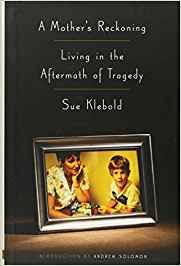 A Mother's Reckoning, however, poses a cathartic and detailed counterargument. It is not, by any means an attempt to recast her role in the tragedy. She does a great deal of very open and wrenching soul-searching as she tries to come to terms with the moments that she wishes she could have back and her wishes that she could have influenced the course of events in anyway that she could, right down to the possibility of not marrying her husband. She loves her son, still does. She aches for the losses that she has contributed to are palpable and her efforts to sort through her relationships with her son and examination of the family she has had are brave, open efforts to shed light on something that is baffling in so many ways.
If I were to look at the entire range of my feelings, flaws and interactions with my son with the intensity and critical acuity that Klebold has looked at this moment of her life and everything that lead to it, I would be a much wiser, more informed and compassionate father. While not a parenting book in the sense that the other I book I read was, it will have a much deeper impact on me.
At this point, I am inclined to grant the other book anonymity. It is very much a by-the-numbers book about parenting. The author, a father of five, is quite confident in his approach to parenting and he boils it down to a set of points, each illustrated with a pithy chapter that features an amusing anecdote about something he did right or something another parent did that he disapproves of. The religious forays were relatively infrequent but did make me bristle at times with other aspects of his view of ideal parenting. On more than one occasion, there were suggestions that there were financial means to good parenting or the building of strong memories. On another occasion he excoriates a father he never met for golfing on the weekend and says that all fathers should quit golf. He steps back slightly from this position and he does eventually acknowledge that there are circumstances where golf is not something that fathers ought to quit and fess up that he does not know the father he skewers, but he continually favours making his points, and others, in simplistic terms.
As the religious orientation of the other parenting book emerged -- at first in passages quoted from the Bible that mix easily with adages from Garrison Keillor and other secular voices, but beyond to passages describing the Devil as a tangible figure who is celebrated at Halloween -- the shift from pithy and insightful toward fear-based and narrow-minded made me weary of the confident certitude that the author worked from. The checklist that the author -- as other authors of parenting do's and don't's -- created ultimately lacked a depth or flexibility that would come from the advice that is found in Klebold's book. Whether a book of 10, 40 or 100 "tips," such books leave substantial gaps and perhaps give a parent a sense of inadequacy because they did not do the 63rd item from a checklist or that they forgot much about a book that was actually quite forgettable to begin with.
While those checklists would find their way to the discard bins with some speed, Klebold's book, even as a mere talisman on my shelf, would be a reminder of the need for compassion, patience, sensitivity and intuitiveness that ought to guide a parent through each moment of this vocation.
Klebold, if the name rings a bell more faintly than you feel it should, is the mother of Dylan Klebold, one of the two young men who instigated the tragedy at Columbine High School in 1999. Her book is a detailed account of her efforts to come to terms with her son's actions, and her absolute bewilderment at not knowing that her son was preparing to do what he did as his last days of high school counted down. It has been easy over the years for outsiders to accuse Klebold and her husband, suburban affluence, adolescent disillusionment and the absence of gun control as factors in the tragedy at Columbine and I would count myself among those who opted for those simplicities in interpreting (and shelving) its meaning. The reality of Columbine, so many other tragedies of that nature and, to be honest, everyone of our lives, is that there are secrets that we all keep and ought find a safe ear to share them with in order to connect with one another and be the people that we have the potential to be if those secrets remain tightly wrapped in pride.
A Mother's Reckoning, however, poses a cathartic and detailed counterargument. It is not, by any means an attempt to recast her role in the tragedy. She does a great deal of very open and wrenching soul-searching as she tries to come to terms with the moments that she wishes she could have back and her wishes that she could have influenced the course of events in anyway that she could, right down to the possibility of not marrying her husband. She loves her son, still does. She aches for the losses that she has contributed to are palpable and her efforts to sort through her relationships with her son and examination of the family she has had are brave, open efforts to shed light on something that is baffling in so many ways.If I were to look at the entire range of my feelings, flaws and interactions with my son with the intensity and critical acuity that Klebold has looked at this moment of her life and everything that lead to it, I would be a much wiser, more informed and compassionate father. While not a parenting book in the sense that the other I book I read was, it will have a much deeper impact on me.
At this point, I am inclined to grant the other book anonymity. It is very much a by-the-numbers book about parenting. The author, a father of five, is quite confident in his approach to parenting and he boils it down to a set of points, each illustrated with a pithy chapter that features an amusing anecdote about something he did right or something another parent did that he disapproves of. The religious forays were relatively infrequent but did make me bristle at times with other aspects of his view of ideal parenting. On more than one occasion, there were suggestions that there were financial means to good parenting or the building of strong memories. On another occasion he excoriates a father he never met for golfing on the weekend and says that all fathers should quit golf. He steps back slightly from this position and he does eventually acknowledge that there are circumstances where golf is not something that fathers ought to quit and fess up that he does not know the father he skewers, but he continually favours making his points, and others, in simplistic terms.
As the religious orientation of the other parenting book emerged -- at first in passages quoted from the Bible that mix easily with adages from Garrison Keillor and other secular voices, but beyond to passages describing the Devil as a tangible figure who is celebrated at Halloween -- the shift from pithy and insightful toward fear-based and narrow-minded made me weary of the confident certitude that the author worked from. The checklist that the author -- as other authors of parenting do's and don't's -- created ultimately lacked a depth or flexibility that would come from the advice that is found in Klebold's book. Whether a book of 10, 40 or 100 "tips," such books leave substantial gaps and perhaps give a parent a sense of inadequacy because they did not do the 63rd item from a checklist or that they forgot much about a book that was actually quite forgettable to begin with.
While those checklists would find their way to the discard bins with some speed, Klebold's book, even as a mere talisman on my shelf, would be a reminder of the need for compassion, patience, sensitivity and intuitiveness that ought to guide a parent through each moment of this vocation.
Thursday, November 2, 2017
To Walk Alone
It is just 400 metres. Just.
But it is the walk to school and as much as I want my son to develop the independence he would have in walking himself to school, it ain’t 1972 (when I walked half the distance and crossed only one street rather than three) to get to school when I was in kindergarten. Another factor that may have influenced that was the challenge my mother would have faced of dressing my younger brothers to get them out the door to do the walk along with me.
He made his request to walk to school on his own and, as is often the case, a resolution of sorts emerged before the day was out. Unfortunately, it merely happened to be an opportunity to cop out rather than take the topic as far as we could. The out of school care (OOSC) program he is in, coincidentally enough, sent out an email a few hours after his request to me. In the email, they reiterated their need for the kids to be logged in when they arrive for they day. They did not, however, make it explicit that it was the parents’ responsibility. If I wanted to close down the discussion, I could say that OOSC wants or needs his mother or I to log him in and out when we drop him off and pick him up.
I want him to have this responsibility and the trust, confidence and independence that would go with it but now it is something that requires a great deal of negotiation with his school, or the OOSC program. It is quite easy to say that times have changed but the institutions have girded themselves with such rigorous caution against liabilities. My wheels are already turning about the negotiations that I could have with either the school or OOSC to discuss him going on his own and, at OOSC, logging himself in. There is a strong possibility that older kids in the program walk themselves there and log themselves in.
But it is the walk to school and as much as I want my son to develop the independence he would have in walking himself to school, it ain’t 1972 (when I walked half the distance and crossed only one street rather than three) to get to school when I was in kindergarten. Another factor that may have influenced that was the challenge my mother would have faced of dressing my younger brothers to get them out the door to do the walk along with me.
He made his request to walk to school on his own and, as is often the case, a resolution of sorts emerged before the day was out. Unfortunately, it merely happened to be an opportunity to cop out rather than take the topic as far as we could. The out of school care (OOSC) program he is in, coincidentally enough, sent out an email a few hours after his request to me. In the email, they reiterated their need for the kids to be logged in when they arrive for they day. They did not, however, make it explicit that it was the parents’ responsibility. If I wanted to close down the discussion, I could say that OOSC wants or needs his mother or I to log him in and out when we drop him off and pick him up.
I want him to have this responsibility and the trust, confidence and independence that would go with it but now it is something that requires a great deal of negotiation with his school, or the OOSC program. It is quite easy to say that times have changed but the institutions have girded themselves with such rigorous caution against liabilities. My wheels are already turning about the negotiations that I could have with either the school or OOSC to discuss him going on his own and, at OOSC, logging himself in. There is a strong possibility that older kids in the program walk themselves there and log themselves in.
For
about 2 1/2 years I have walked my son to and from daycare regularly
and we put our steps in throughout the week to other destinations, so
covering the distance is not a factor and at every intersection my loop
of "look both ways, watch the cars" has played incessantly. He actually
stops and waves cars through ahead of him, so I now have to coach him up
a bit on asserting his own rights at an intersection but at least he is
erring on the side of caution. For the third street crossing he has a
well-worn pedestrian overpass that takes the concerns of looking both
ways out of the equation. At this point, though, I find it frustrating
that I have to rationalize this brief walk to the extent that I do
because it is unsupervised.
I
am confident that the risks, if any, are minimal and that the
consciousness of stranger-danger or traffic are in part a factor of our
collective fears, being normalized rather than mitigated. The only other
people I see when I walk him to OOSC or school are another parent who
lives on the same floor on me taking her daughter, and two cyclists
coming north on the sidewalk and prompting me to squish to my left as my
son walks the top edge of a low cinder block wall he climbs every
morning. I know this walk.
There
seems to have been a trade-off between low-probability tragedy and in
favour of the guaranteed loss of independence and autonomy, not to
mention a higher probability risk of a child getting hit by a car given
the number of parents drive their kids to school now. There is also the
spectre of parent-shaming looming on this matter of letting a child
venture out on their own. It is easy to say that it is not that much
time each day for a parent to drop off their kids and it is a
good time for my son and I talk each day. The city, however, is not as
dangerous as we convince ourselves it is and having my son develop the
skills to navigate himself through the city on foot or by transit are
things that would give him the autonomy that I had when I was his age.
When I raised this with him on our walk home he had forgotten about it but I doubt that it will be for long. I will likely wait until it is light in the mornings again and venture carefully toward ramping him up toward this walk or similar walks and assure myself that he can do it and assure him that I want to give him this independence.
When I raised this with him on our walk home he had forgotten about it but I doubt that it will be for long. I will likely wait until it is light in the mornings again and venture carefully toward ramping him up toward this walk or similar walks and assure myself that he can do it and assure him that I want to give him this independence.
Saturday, October 14, 2017
The Right Run
Competitive sports have been something I have done my best to keep my son way from to this point. He is going to be six in a few weeks and I have so far avoided the drumbeat to enrol him in hockey or any of the team sports that tend to bring out the competitive instincts of parents who have their own aspirations or agenda. He has been told a few times that he is not going to be playing football regardless of how big he gets.
To this point, he has been relatively active with gymnastics and swimming thus far and we may be at a crossroads with the gymnastics. His most recent round of gymnastics is in the late afternoons which has seen his class relegated to a corner of the gym that affords the older and more competitive kids access to much of the equipment that was the highlight during previous sessions.
Running continues to appeal and there have been more and more opportunities for him to sign up for races. He wants to race me whenever we are walking somewhere and his enthusiasm for it remains unbridled. Today, he had a 2K race and on a bracing, subzero morning he toed the line with about 30 other kids. Before the race, I cautioned him to go out slowly, take his time and save his energy for the second half of the race.
In the 1K race he had last month, he finished in just under 6 minutes, but I was not sure what to expect with double the distance. For an experienced runner, grasping the challenges with pacing, with saving a little energy, whether to compete with the people around or simply with yourself are all hard things to take into account.
As the kids start to cross the finish line and the minutes ticked away, I wondered how he was doing out there with the extra distance and whatever concerns I had eased when he crossed the line in tandem with a new friend and did a high five as the other boy's mother and I looked on. They fell into step together and spent the race getting acquainted with one another and by the time they crossed the line, they were a team. We parted ways probably too quickly, but I was not immediately aware how well Gabriel bonded with this other boy. As he talked about how he told his running partner about himself and his family and learned the same from him, I thought about how I bonded with fellow runners during my favorite races and how, whether we spoke a great deal or not, we shared the run in several ways and got to know each other and cheer each other on as we pursued our goals.
I am fully aware that as Gabriel gets older, sports will pose dilemmas as we weigh the difference between competing and participating. It is still too early for that and there is the simple matter of him finding sports that he is passionate about. If running happens to be the sport, then he has had a good head start and gymnastics will be helpful in developing the balance and physical awareness required for other sports. I am conscious of the blight of the participant medal and hope that he learns the lessons that come with competing but I hope that those lessons are learned in areas or endeavours where he is striving to do his best and find the personal achievement or growth that he seeks rather than in sports where he is less interested.
In the meantime, I will cross my fingers that he runs into his new teammate the next time he lines up for a race.
Wednesday, September 20, 2017
The Walk Home Evolves
 |
| From https://www.emuparadise.me/ |
Our heat has been off in our condo as the boiler is being replaced. With the temperatures closer to freezing than we would like there is a little more bundling up. A few nights back we asked our son if he wanted pyjamas with feet or without feet.
"Yes!", he replied.
We asked again and again -- I could inflate this to 7 repetitions of the question -- and each time he replied, "Yes."
Finally I said, "You know, if you can't answer an A or B question, we might have to hold you back a year."
His response, which I admit I clearly had coming: "You already did!!"
He's 5 now. Going on 15 in November.
Despite the lad being in school now and rounding out his truncated days in kindergarten ("Oh, when I was a boy...") with sessions at Out of School Care (OOSC), I still have the opportunity to walk him home.
The changes may have been gradual but they are significant and noticeable at this point. Our walks on the pedestrian overpass that straddles 14th Street are far more amusing now as he essentially turns it into his version of the old video game Frogger. He pauses strategically before racing over each lane of traffic to avoid getting exploded. I'm slower to catch on but he assured me on Monday that even though I got exploded I still had two lives left. (Obviously he is getting exposed to video games somewhere.) Today he added a variation to the game by telling me that the northbound cars were marshmallows and the southbound bombs. Or was that the southbound were marshmallows. The strategy has changed and he is less likely to adopt the full on sprint across the overpass to smash himself into the chainlink fence on the other side of the bridge. He has not, however, developed a clear scoring system.
The conversation has opened up a little more. He still tends to give accounts of the people who contributed to the scrapes and cuts on his knees. This month, however, the stories have been of real conflict over sharing or not sharing and I have taken the opportunity to share with him my simmering observation that one of the hardest things to decide is whether it is better to be patient and tolerate a situation or to impose your will on someone and make them concede to you. At his age the second scenario may result in a fight, though there may be a chance that will or personality can assert some influence as well. I told him my tendency has been to be patient, though I have wondered from time to time if that was the best strategy. Despite my doubts, I told him that I preferred that he be patient and try to talk things through -- the third way that I have yet to get full command of.
A chance encounter with his uncle on our way home today also gave me the opportunity to talk about walking. His uncle is involved in a conference on walkability here in Calgary this week and after we had a brief chat about the conference, my son and I continued home talking about how much we walk. I did not bother to trouble him with kids who have to be bussed to school and just reminded him of entire weekends we have gone without using the car. I pointed out the advantages for his health and safety when there are fewer cars or more time spent walking. Today, though, I could have added that it is a good opportunity to clear your head at the end of the day.
Sunday, September 10, 2017
Again, Again

Tonight was one of those nights where a song and a musician provided a span of the bridge that will take us through that still-distant stretch of adolescence to whatever conversation there will be when we sit down to share music on the other side.
After nearly a year of listening to an emerging pop-folk master named Paul Johnson, who commercially plies is craftsmanship under the guise of Canyon City, Gabriel was asking to hear, "The one that starts, 'I woke before the sun rose...'" during his bath and asked for it again as I turned him in for the night. As we went on to listen to said song, titled "Needles and Pins," eleven to twelve times in a row until his breathing finally eased into the rhythm that portended sleep we talked and talked - the lad not merely stalling sleep, but asking questions that would not come from anywhere else.
"What is grace?" and, in response to my attempt to capture it for a 5-year-old, "What is a virtue?"
We lay in the dark exchanging favorite passages of the song. He, the chorus, with its fairy tale mention of plastic crowns and the certainty about where home is; me the more adult world evocations about "wear(ing) a tie to go to work and tell(ing)... lies like everything's okay" and "los(ing) some keys in the dust." With each repetition of the song in the dark, Gabriel's questions continued about the song, the individual words that emerged and caught his ear more easily with each listening and I'm sure there were unasked questions planted there to bloom later about music, craft, poetry and love that he will ask when he has the words in the weeks and years ahead.
I have every confidence that Mr. Johnson/Canyon City will have a wonderful career ahead of him as songs such as "Needles and Pins" continue to find their path to ears and hearts in the days ahead. If it has not happened already, he will nightly have audience members who will tell him that he wrote their song, whether it is the one they make love to, danced for the first time as husband and wife or any other milestone in life of someone following their romantic path to one-and-onlys that he describes so aptly in song and song again. In about ten years or so, there will also be a 60-year-old man with his 15-year-old son -- the lad possibly doing a great job of portraying adolescent indifference to anything the old man springs on him or indulging in some patience with me for the night -- and, with a wink, I'll simply say that I used his first album to lull that lad asleep not so long ago.
Thanks Paul.
Monday, September 4, 2017
On Kindergarten Eve
As I write this post, I am contemplating the browser tab for the Google search, "inspecting for lice" and wondering whether I should bookmark it or just leave it open. I had to do a search last night after a flurry of text messages and a phone call from friends we camped with over the weekend, and it made for a little baptism for mother and father heading into the heart of September. The flashlight inspection last night, the lack of even a single scratch of the scalp and a good hair wash tonight provide some reassurance that we are all clear.
We hope.

Today, it was a challenge to give the sense of significance that was appropriate for the occasion of starting school. An afternoon at a trampoline centre, an early bath and a bit of a speech from the old guy (that's me!) was part of the effort to make something of the day, but it is more of a transition for mom and dad than it is for him. New friends, new expectations and perhaps the threat of a little less play than has been the case, but it may be hard for him to identify significant differences between elementary school and day care. There will be lots of new kids and a lot of bigger ones too, but other than that there will be little to overwhelm the boy who so calmly transitioned into day care 30 pounds and 18 inches ago.
There are some questions about how we prepared him, but I try to tell myself that would be the case with any parent. He has an undeniable knack for math and sciences, a mild indifference to art, drawing, and... ahem... printing. I look ahead to the partnership with his teachers in the years ahead to help us set goals for him and I anticipate the challenges we will all face with some degree of excitement. I can picture him sitting down at the kitchen table - not necessarily tomorrow night - working on the things that he is struggling with where I can bring something to his growth, but I will dread -- just as I did during junior high school -- the Science Fairs that loom.
Apart from the scholastic aptitudes that are yet to be measured more precisely, there is the boy that we are sending off into the world. He is an affectionate boy who can be a goofball and enjoys the role of the clown. There are moments when he can withdraw when he is not getting his way, but there is a chance that he is more sensitive to the needs of others when he is in a big room. From day one we have been conscious of his size. I recall seeing other newborns when he was just two or three weeks old and gaping at my wife with the question, "Was he ever that small?" We are more than a little anxious about how the expectations and perceptions of him are altered because of his size and while we may have done him an advantage academically by waiting an extra year before sending him on to kindergarten, there may be greater expectations of him as he towers over the other kids in his class.
Ultimately though, he is a prodigious hugger and (if they allow that in school) I think he is the kind of kid that can help bring together a room of kids. We that thought and the insistence that we want, above all, for him to be a good, kind sensitive boy and man, we send him into the world.
Sunday, July 30, 2017
(Almost) Inner-City Parenting
Unlike the pattern described recently in a Vox article in parenting in the inner-city, my wife and I moved from the 'burbs to the inner-city before becoming parents. There might be quibbling about the definition of inner-city in the part of Calgary where we have lived for the last nine years. Calgary has its onion layers of growth and development and we moved 16km closer to downtown, from the layer that afforded the view of the northwestern city limits to a neighbourhood where the original houses are over 100 years old.
At the time of the move, we actually increased the square footage we occupied, moving from a newish 1000-square-foot townhouse to a 1400 square-foot apartment-style condominium. Parenthood was not on the horizon when we moved, but we immediately came to appreciate the walkability of the neighbourhood. As I said, it was not significant at the time, but rather than facing the prospects of bussing our son past an empty lot declaring itself (as it has for nine years) the future site of a school, we are now within 1.2 kilometres of three elementary schools. Our son's is just 500 metres away. Beyond that there are three playgrounds, two pools and the daycare that he has attended for the last 2 1/2 years. The level of car traffic being makes me reluctant to let him head out on his bicycle on his own but with time, he will be able to navigate his way onto the bike paths safely. Ultimately, though, we are in a location where he will have relative independence to move about on his own without being reliant on his mother and I to get to school by car.
When Gabriel came along, there was no impulse to pull up stakes and head to the burbs for the extra space and a patch of grass that we could declare exclusively ours. The infrastructure in our neighbourhood is abundant. If there was an issue with the space in the condominium, we would adapt to it and we would cross our fingers that this would be what he grew up knowing. We have ready access not only to the schools, daycare, parks and pools, but the transit system within a 7-minute walk. Transit easily gets us to music class, downtown, museums, the zoo, movie theatres and other facilities that are all keys parts of free time that I spend with my son (without relying on the car.)
There are other parts of Calgary, namely the still-developing East Village, that have the potential to give families the opportunity to stay right in the downtown area. Schools are currently a little harder to come by in the East Village, but the amenities there are quite attractive. With museums, the library and playgrounds all nearby, the main issues are proximity to schools and whether or not developers are willing to provide the space families need or if they favour the profitability of smaller units.
In our case, the space we have is more than enough. If we happened to have ended up having two children, we may have had some tougher decisions to make, especially if we ended up with a boy and a girl, but at this point, the 1400 square feet we have is more than enough. The blog 5 Kids 1 Condo makes the case that a bit of hacking (both in terms of trimming away the unessential and finding a few deft short cuts) would further maximize the way we use our space. Our mindset throughout, however, has been to use the amenities around us as much as possible rather than insulating ourselves in a detached home and investing a lot of time and energy in duplicating what is readily at hand.
The lessons that we have learned and the habits we have developed are all different from what would be the case in the 'burbs. Our son has probably socialized more on the nearby playgrounds and his time walking or travelling by transit has exposed him to a wider variety of people from walks of life he would not encounter if he was chauffeured about the city from a distant locus of similar houses with a vista of matching garage doors extending down a street.
At the time of the move, we actually increased the square footage we occupied, moving from a newish 1000-square-foot townhouse to a 1400 square-foot apartment-style condominium. Parenthood was not on the horizon when we moved, but we immediately came to appreciate the walkability of the neighbourhood. As I said, it was not significant at the time, but rather than facing the prospects of bussing our son past an empty lot declaring itself (as it has for nine years) the future site of a school, we are now within 1.2 kilometres of three elementary schools. Our son's is just 500 metres away. Beyond that there are three playgrounds, two pools and the daycare that he has attended for the last 2 1/2 years. The level of car traffic being makes me reluctant to let him head out on his bicycle on his own but with time, he will be able to navigate his way onto the bike paths safely. Ultimately, though, we are in a location where he will have relative independence to move about on his own without being reliant on his mother and I to get to school by car.
When Gabriel came along, there was no impulse to pull up stakes and head to the burbs for the extra space and a patch of grass that we could declare exclusively ours. The infrastructure in our neighbourhood is abundant. If there was an issue with the space in the condominium, we would adapt to it and we would cross our fingers that this would be what he grew up knowing. We have ready access not only to the schools, daycare, parks and pools, but the transit system within a 7-minute walk. Transit easily gets us to music class, downtown, museums, the zoo, movie theatres and other facilities that are all keys parts of free time that I spend with my son (without relying on the car.)
There are other parts of Calgary, namely the still-developing East Village, that have the potential to give families the opportunity to stay right in the downtown area. Schools are currently a little harder to come by in the East Village, but the amenities there are quite attractive. With museums, the library and playgrounds all nearby, the main issues are proximity to schools and whether or not developers are willing to provide the space families need or if they favour the profitability of smaller units.
In our case, the space we have is more than enough. If we happened to have ended up having two children, we may have had some tougher decisions to make, especially if we ended up with a boy and a girl, but at this point, the 1400 square feet we have is more than enough. The blog 5 Kids 1 Condo makes the case that a bit of hacking (both in terms of trimming away the unessential and finding a few deft short cuts) would further maximize the way we use our space. Our mindset throughout, however, has been to use the amenities around us as much as possible rather than insulating ourselves in a detached home and investing a lot of time and energy in duplicating what is readily at hand.
The lessons that we have learned and the habits we have developed are all different from what would be the case in the 'burbs. Our son has probably socialized more on the nearby playgrounds and his time walking or travelling by transit has exposed him to a wider variety of people from walks of life he would not encounter if he was chauffeured about the city from a distant locus of similar houses with a vista of matching garage doors extending down a street.
Sunday, July 23, 2017
Owning Up
Our Saturday morning rituals truncated for the summer, we have foregone the music lessons until the fall, but we still squeeze in our lunch pizzas with my cronies and yesterday, one of the less regular attendees in the circle asked Gabriel if he had a piggy bank and after a confirming nod, handed over a toonie.
Prior to that, my inquiry about whether Gabriel was ready to get on the train was met with some excitement, even if it did not entail a stop for a snack at Starbucks. The view of the city from the train still holds its command over Gabriel, and of course, there is a bit of local colour or grit on the train that he does not encounter from a backseat of the car.
When we arrived on the platform and he punched our ticket for the ride, Gabriel gravitated toward a boy who was a year older but happened to be playing with an Optimus Prime Transformer toy and wearing a baseball cap, just like Gabriel - check, check. The two of them fell into easy conversation and when that happens as spontaneously as it does, about ten minutes passed before they got around to exchanging names. When we boarded the train, they sat together. The boy's father had little in common with me other than the boys and the proximity of their ages. He was dressed in colours that seemed dark and muted by neglect or disregard. He had a large tattoo that covered most of his left bicep and for the moment preoccupied himself with his cellphone, something I am not above but wasn't doing this time around as Gabriel was inviting me to explain my affection for the long-gone Montreal Expos as we walked to the station.
As the train headed downtown, Gabriel and the boy continued their conversation and as it unfolded, the boy felt the need to raise the point that the police had taken his Dad's car for no apparent reason. The father in measured, resigned tones indicated that the car was taken because he had a suspended license. There was not a moment of disrespect for authority or the suggestion that he was hard-done-by or deserved or needed a break or express anything to indicate that anyone else was to blame. My respect for the man was moved to the level he deserved and for the moment I discarded the narrative I was writing about a weekend father putting the time in. He was setting a great example for his son and for myself. It is easy to forget the importance of setting an example, especially when it comes to responsibility.
So the next time there is an opportunity to avoid taking myself down a notch in my son's estimation of me, I will remind myself of this man and father who acknowledged reality rather than trying to revise it to suit me in the short term.
Prior to that, my inquiry about whether Gabriel was ready to get on the train was met with some excitement, even if it did not entail a stop for a snack at Starbucks. The view of the city from the train still holds its command over Gabriel, and of course, there is a bit of local colour or grit on the train that he does not encounter from a backseat of the car.
When we arrived on the platform and he punched our ticket for the ride, Gabriel gravitated toward a boy who was a year older but happened to be playing with an Optimus Prime Transformer toy and wearing a baseball cap, just like Gabriel - check, check. The two of them fell into easy conversation and when that happens as spontaneously as it does, about ten minutes passed before they got around to exchanging names. When we boarded the train, they sat together. The boy's father had little in common with me other than the boys and the proximity of their ages. He was dressed in colours that seemed dark and muted by neglect or disregard. He had a large tattoo that covered most of his left bicep and for the moment preoccupied himself with his cellphone, something I am not above but wasn't doing this time around as Gabriel was inviting me to explain my affection for the long-gone Montreal Expos as we walked to the station.
As the train headed downtown, Gabriel and the boy continued their conversation and as it unfolded, the boy felt the need to raise the point that the police had taken his Dad's car for no apparent reason. The father in measured, resigned tones indicated that the car was taken because he had a suspended license. There was not a moment of disrespect for authority or the suggestion that he was hard-done-by or deserved or needed a break or express anything to indicate that anyone else was to blame. My respect for the man was moved to the level he deserved and for the moment I discarded the narrative I was writing about a weekend father putting the time in. He was setting a great example for his son and for myself. It is easy to forget the importance of setting an example, especially when it comes to responsibility.
So the next time there is an opportunity to avoid taking myself down a notch in my son's estimation of me, I will remind myself of this man and father who acknowledged reality rather than trying to revise it to suit me in the short term.
Wednesday, July 5, 2017
The Curse of Imitation
It happened. It may have actually happened in countless other ways that I have been able to discount with varying degrees of denial. My sighs of exasperation are not quite that dramatic; he probably picked it up at daycare from a kid who picked it up from his or her folks. The eye roll? Okay, that might have been me, but I usually turn away and lift my head to the heavens. Still safe. The running? Yeah, that's me. The resistance to sleep? Nature, not nurture, so I shrug off that genetic hand-off with some resignation.
 For the past ten days I've managed to rein in the volume and find that extra bit of patience when I'm being tested. There was even a little revelation from Alice Munro's The View From Castle Rock where she talked about a relationship between parent and son that underlined the fact that being overprotective of your child (guilty as charged) ultimately prompts the kid to test your limits rather than his own and come to some discovery of self-regulation as limits are tested independently. (If that revelation has reached all of her readers, she deserves another Nobel to go with her one for Literature.)
But this one, I could not deny. The Dude was playing with friends at his grandparents' neighbours two Sundays back. I was there as well, providing some vigilance to relieve the neighbour the burden of tending to my son in addition to her own two sons. We were chatting about kids, summer travel plans and such when Gabriel let out an impatient yell that immediately clanged on my conscience. That was me, clearly something he picked up from me and my go-to move when patience has worn thin or frankly I'm too lazy for a mindful, calmer approach. I immediately (and calmly and gently, I can add) called him over. I was not preoccupied with appearances and what this younger mother might think.
Gabriel sat on my knee thoughtfully and was prepared to listen. There was something about his surrender or openness at that moment that reminded me of a heart-to-heart we had a few weeks before. We sat on the sofa and in the course of the conversation I assured him that I would always be looking out for him and that making sure he was happy and safe. In response he replied, "I never knew that," and there was a sense that it was a genre of father-son conversation that we would be able to have regularly and that there was an honest give and take.
This time around though, I spoke straight up about how he was picking up a bad habit from me - the yell. I told him that it was something I learned and that I was trying to unlearn it and that I needed him to unlearn it before it became a habit. I have been conscious of my tendency for a long time and when I catch myself, I can manage to alter my tone or volume after a tumultuous start to make a change that only a sensitive ear like that of a novelist or a child can pick up on. On this occasion, though, with him on my knee and quiet with a sense of the moment, but it his guilt or mine. Perhaps in his case, there was the realization that the yelling thing did not render any benefits. For that moment, I had the feeling that I was getting through to him and making a pact that the two of us could hold each other to.
I did not give him much opportunity to speak on this occasion and I did not ask him to apologize to his friends. If anything I should have apologized to them, but there was enough self-flagellation for the moment without puzzling two pre-schoolers with this bout of self-awareness.
 For the past ten days I've managed to rein in the volume and find that extra bit of patience when I'm being tested. There was even a little revelation from Alice Munro's The View From Castle Rock where she talked about a relationship between parent and son that underlined the fact that being overprotective of your child (guilty as charged) ultimately prompts the kid to test your limits rather than his own and come to some discovery of self-regulation as limits are tested independently. (If that revelation has reached all of her readers, she deserves another Nobel to go with her one for Literature.)
So, I've dialled back the over-protective, over-corrective impulses. When he scampered off recklessly from a crosswalk (and me) on Monday and landed in a heap after tripping on his feet, I just hoisted him up and comforted him until the tears ended. I held on and let the storm pass and we were both assured that he would live. Tonight, with his feet brown with dirt from an afternoon on the playground and him in no mood for a bath or shower (on consecutive days?!?!) I found the compromise of a ticklish footwash in the sink as he sat on the vanity counter. The novelty amused him and got the job done without undue battle over territory.
The yell, hopefully, will see its decline and disappearance. I'll be the tough nut to crack since it is a go-to in times of stress. It may not be the most reasonable expectation, it is a goal - especially when the dialogue has been already so valuable and illuminating with Gabriel when he's barely 5 1/2.
Onward.
Subscribe to:
Posts (Atom)